A collaborative team of lecturers from Medan Area University (UMA) and Al-Washliyah Muslim Nusantara University (UMN) carried out Community Service (PKM) activities in Kwala Bekala Village, Medan Johor, on Friday-Saturday, December 20-21, 2024.
This PKM carries the theme “Education on Selecting Local Crispy Chicken Fast Food that Complies with Indonesian National Standards (SNI) and Halal” .
The PKM team consists of Healthy Aldriany Prasetyo, STP., MT, a lecturer in Industrial Engineering at UMA, as well as Yayuk Putri Rahayu, S.Si, M.Si., apt., Haris Munandar Nasution, S.Farm., M.Si., and Dr. Supiyani, M.Si., who is a lecturer in Pharmacy from UMN Al-Washliyah.
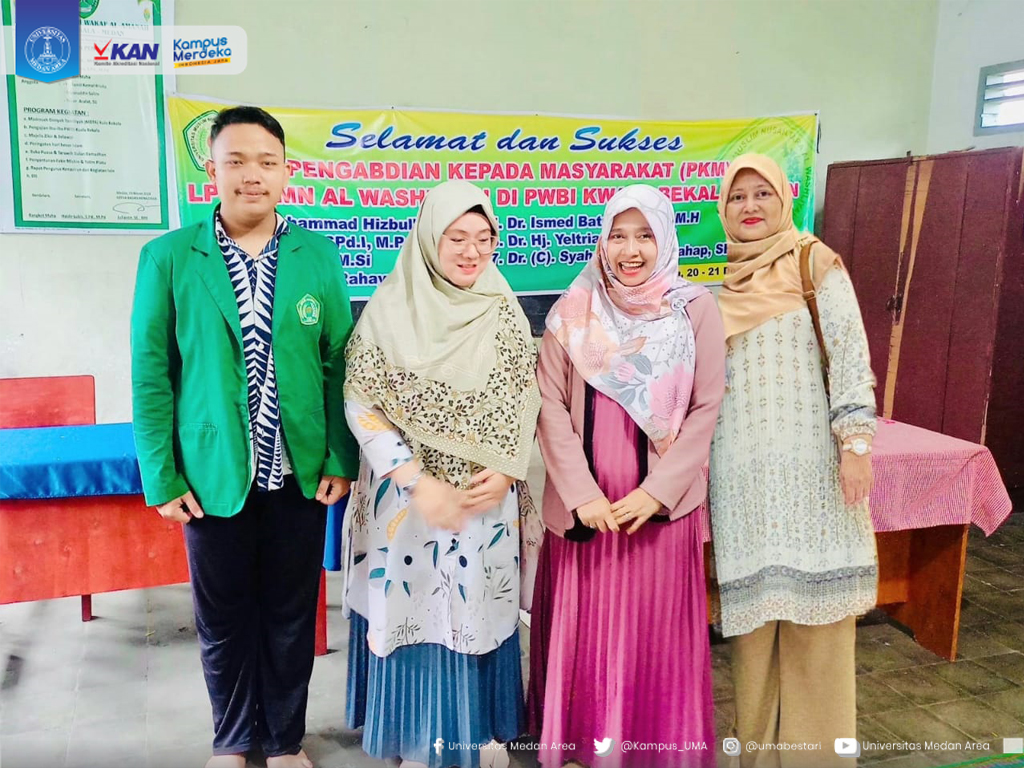
In this activity, the PKM UMA and UMN Al-Washliyah teams coordinated with the Village Head and the Islamic Batak Wirid Association (PWBI) Women’s Study Group in Kwala Bekala Village as partners in increasing public understanding regarding the selection of local crispy chicken fast food that meets SNI and halal standards.
The material presented in this outreach program focused on educating the public about selecting local crispy chicken fast food that meets SNI and halal standards. The primary goal of this activity is to provide the public with knowledge so they can choose food that is safe, healthy, and suitable for consumption, meeting established standards.
The method applied in this PKM is in the form of socialization through educational lectures on the importance of choosing local crispy chicken food that meets standards and provides practical examples of how to choose products that meet SNI and halal criteria.
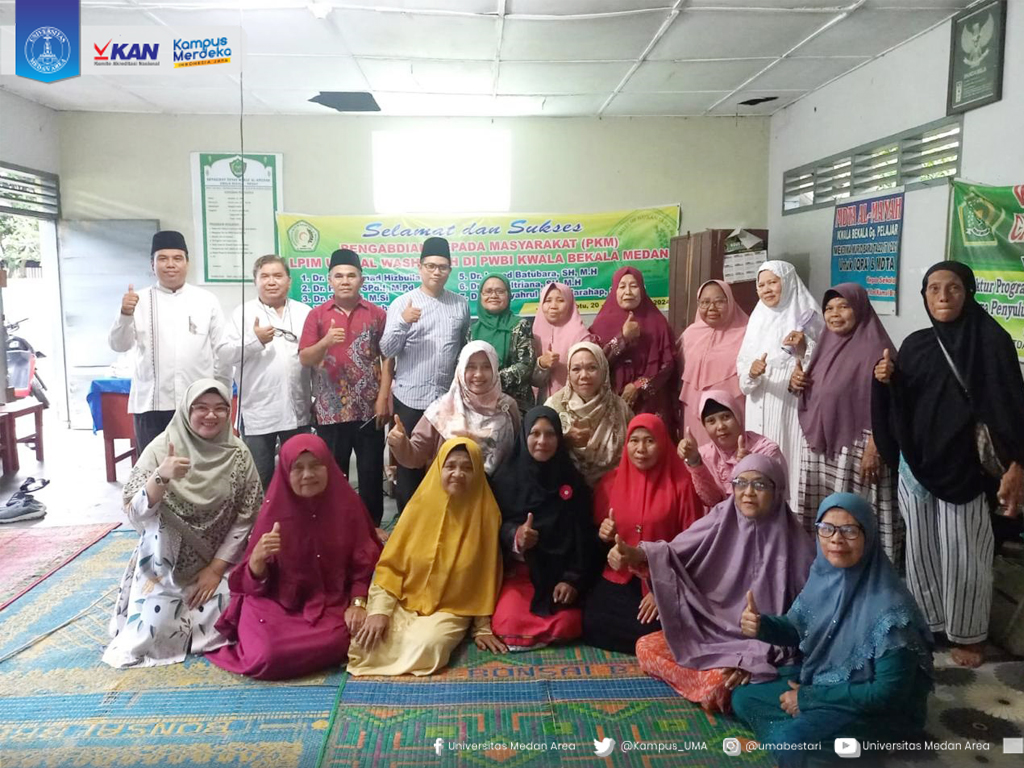
The PKM team also highlighted the importance of the Islamic concept of “halalan thayyiban ,” which teaches that food must not only be halal but also clean, nutritious, and healthy for consumption. This concept serves as a foundation for fostering better eating habits among the community, especially among the women attending the PWBI religious study group, most of whom are converts to Islam with limited religious knowledge.
This education is crucial given the frequent cases of microbial contamination and poisoning in chickens that are not hygienically handled. Therefore, through this Community Service Program (PKM), the public is educated on the importance of food processing and consumption that meets health and food safety standards to maintain the health and well-being of their families.