On Thursday (01/12/2022), the Faculty of Engineering, Mechanical Engineering Study Program, held a public lecture on the theme “Food Security and Threats to People’s Sovereignty from the Perspective of Indonesian Geopolitics” at the Convention Hall, 3rd Floor, Rectorate Bureau Building.
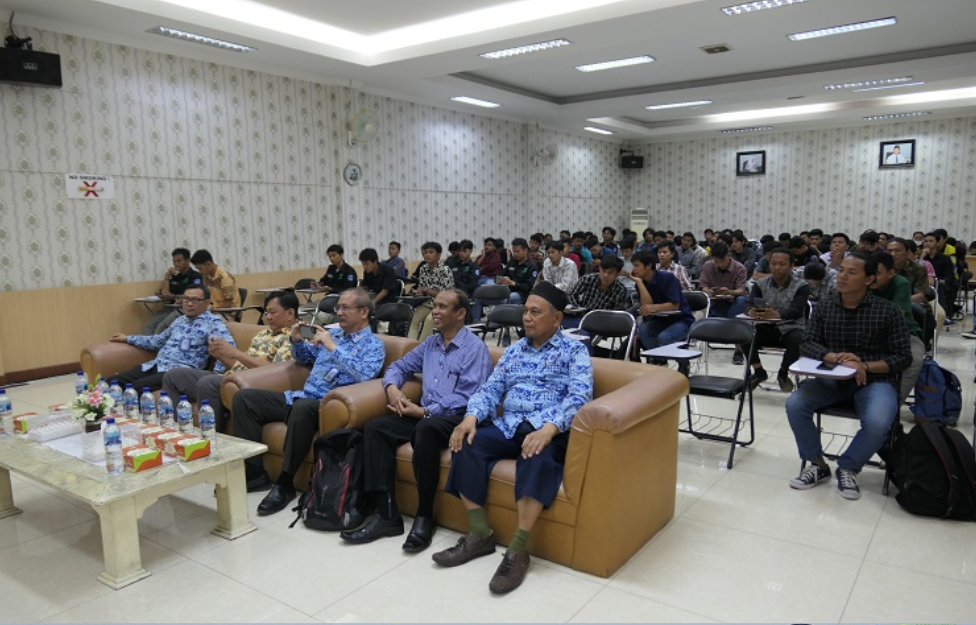
The event was opened by the Rector of Universitas Medan Area, Prof. Dr. Dadan Ramdan, M.Eng., M.Sc., and attended by the Vice Dean of the Faculty of Engineering, Head of the Study Program Muhammad Idris, ST, MT, mechanical engineering faculty members, and students from the mechanical engineering study program.
In his remarks, the Rector of Universitas Medan Area, Prof. Dr. Dadan Ramdan, M.Eng., M.Sc., stated that issues surrounding food availability, such as the scarcity of staple food items, are frequently discussed and are related to national and global food security concerns. Addressing food security challenges requires a focus on sustainable agriculture, which was explored in depth during the public lecture in line with the chosen theme.
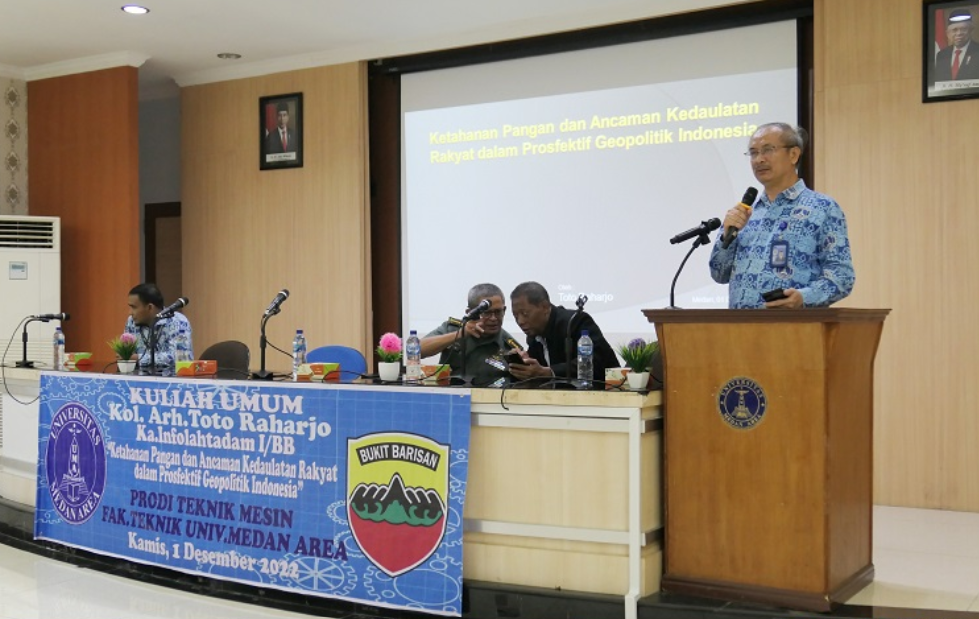
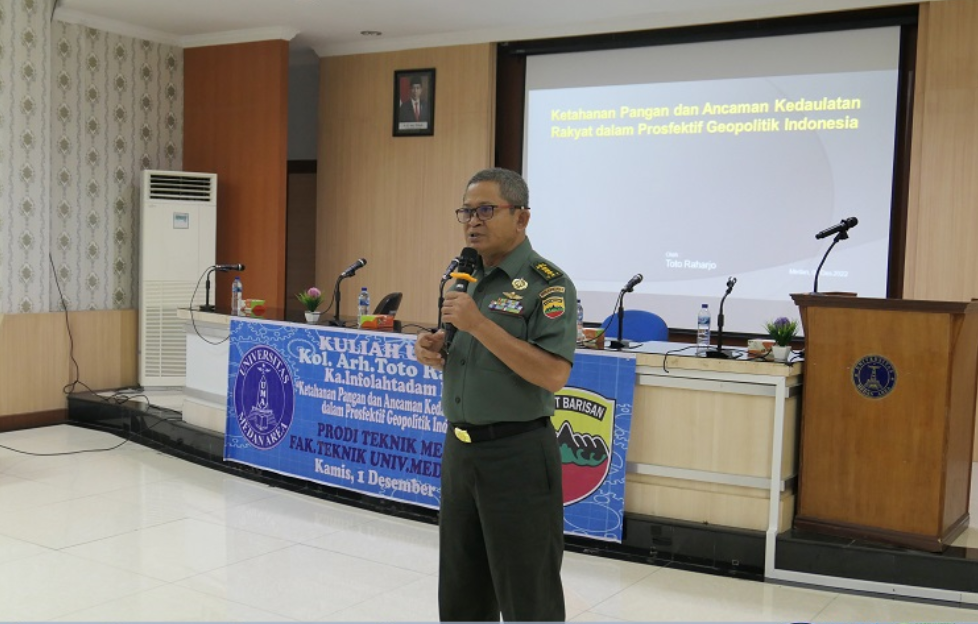
The public lecture featured keynote speaker Col. Arh. Toto Raharjo, Head of Infolahtadam I/BB, who presented on the topic of geopolitics as an understanding of everything related to a nation’s geopolitical dynamics. It involves comprehending the intricacies of the nation and homeland, as well as recognizing the physical and mental conditions of the land and its people.
Geopolitics entails learning about both material and non-material (spiritual) realities, as a nation’s journey is inseparable from the dynamics and dialectics of both realms. Knowledge and philosophy extend over this spectrum, present on the surface of these domains.
Indonesia holds a strategically significant geopolitical position in global interactions—not only due to its location between two oceans and two continents, which presents vast opportunities for influence on the international stage, but also because of its rich and diverse natural resources.
In the western region, Indonesia has oil reserves in Sumatra, Java, and Kalimantan, while in West Papua, there are gas and gold deposits. This vast natural wealth positions Indonesia to potentially become the most powerful nation in Asia.
Sumatra is a prime example. This island in western Indonesia is not just known for its legendary gold, breathtaking natural wilderness, or the glory of Srivijaya. Geopolitically, Sumatra holds immense strategic importance—though, unfortunately, many Indonesians remain unaware of its significance.
As a kind of barricade facing key maritime entry points to East Asia, Sumatra is often the first landing site for maritime traffic. Gold from its mountain ranges and camphor from its forests have historically drawn traders from around the world to Suvarna Dwipa, the “Island of Gold.” Beyond that, Sumatra is home to some of the oldest traces of Indian, Arab, and Chinese influence in Southeast Asia.
Indonesia has 39 straits, four of which are among the world’s nine busiest shipping checkpoints, alongside others like the Strait of Hormuz and the Strait of Malacca.
Indonesia indeed possesses a powerful asset: its geopolitical destiny, positioning it to grow into a focal point for geopolitical influence struggles among world powers and a center of global economic gravity.
However, we are often caught up in surface-level discussions, neglecting the underlying, more profound matters—especially those beneath the surface. This is unproductive. The ongoing debates among various elements of the nation are suspected to have been strategically woven by foreign entities and local collaborators into a “democracy industry,” characterized by manufactured and fabricated dynamics such as opposing opinions, demonstrations, sectoral egos, street-level parliamentary conflicts, and more.