Triple-Helix Synergy of Universitas Medan Area Lecturers Through the PKM-DRTPM Program: Training and Implementation of Integrated Farming Systems to Maximize Agricultural Yield for Lembur Ayu Farm Group in Sei Mencirim Village, Kutalimbaru District, Deli Serdang Regency
Agriculture is a vital sector in Indonesia’s economy, yet it still faces challenges in improving productivity and efficient resource use. To address these challenges, on Monday, August 12, 2024, Universitas Medan Area (UMA) implemented an integrated farming system development training under the Community Service Grant Program (PKM) funded by the Directorate of Research, Technology, and Community Service (DRTPM) of the Ministry of Education, Culture, Research, and Technology (Kemendikbudristekdikti) for the 2024 Fiscal Year. The event was held in Sei Mencirim Village, Kutalimbaru District, Deli Serdang Regency, North Sumatra, aiming to optimize crop yields and enhance farmers’ sustainable welfare.
The integrated farming system developed by UMA’s team incorporates key components such as conventional agriculture, livestock farming, aquaculture, and renewable energy. In addition, appropriate technology tools were distributed to increase the effectiveness and productivity of the Lembur Ayu Farm Group and the broader community in Sei Mencirim.
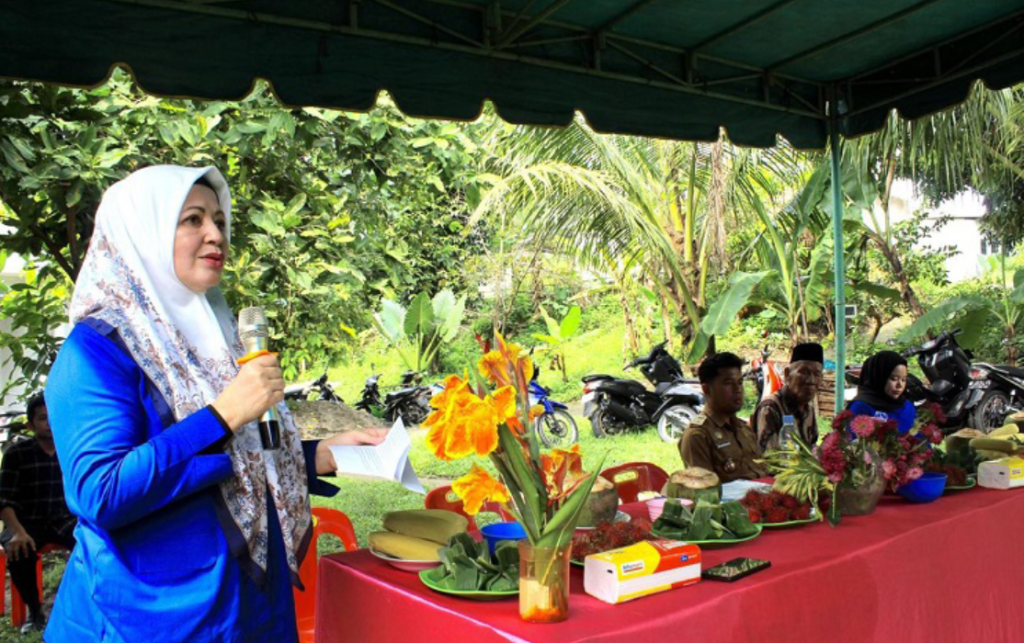
The program adopts a Triple-Helix concept, fostering synergy among government, academia, and practitioners. The government, represented by Kemendikbudristekdikti, coordinates and supports the program, while UMA academics develop and implement the integrated farming system. Practitioners, including local farmers, apply the developed technology in their agricultural practices.
This community service initiative was attended by prominent figures, including:
- Prof. Dr. Syafrida Hafni Sahir, SE., M.Si.
- Dr. Siti Alhamra Salqaura SE., M.Si.
- Siti Sabrina Salqaura SP., M.Sc.
- Two UMA students
- Village head Mr. Johan Wahyu, S.Pd.I
- Community leader Mr. Kastolani
- Mr. Ali Hasyimi, M.Psi., head of the Lembur Ayu Farm Group
- Village heads (Kadus), farm group members, and other farmers from Sei Mencirim.
The event began with an opening speech by Mr. Johan Wahyu, S.Pd.I, the village head, who expressed his gratitude to UMA’s lecturers for their initiative. He emphasized the importance of the program in advancing Sei Mencirim and supporting the Lembur Ayu Farm Group. “This program is beneficial in helping the community create agricultural production tools, which are crucial for increasing our productivity,” he said.
Prof. Dr. Syafrida Hafni Sahir, SE., M.Si. delivered a welcoming speech and officially launched the 2024 PKM-DRTPM program. “We hope that this training and the distributed tools will enhance agricultural productivity, improve the village’s prosperity, and increase its visibility,” she remarked.
During the training, Siti Sabrina Salqaura SP., M.Sc. emphasized the importance of using organic fertilizers and reducing pesticide use. “Regarding the challenges you mentioned with subsidized fertilizer distribution, we can address the costs by using organic fertilizers, such as compost from livestock manure and goat urine. Additionally, the shredding machines provided can process agricultural waste, like straw and rice husks, into natural fertilizers,” she explained.
The implementation of this integrated farming system has demonstrated increased resource efficiency and food production. For instance, tasks like plowing the fields, which were previously performed using buffaloes, are now more efficiently carried out with mini tractors. Furthermore, the program has raised community awareness about the importance of integrating various agricultural sectors to achieve sustainable farming.
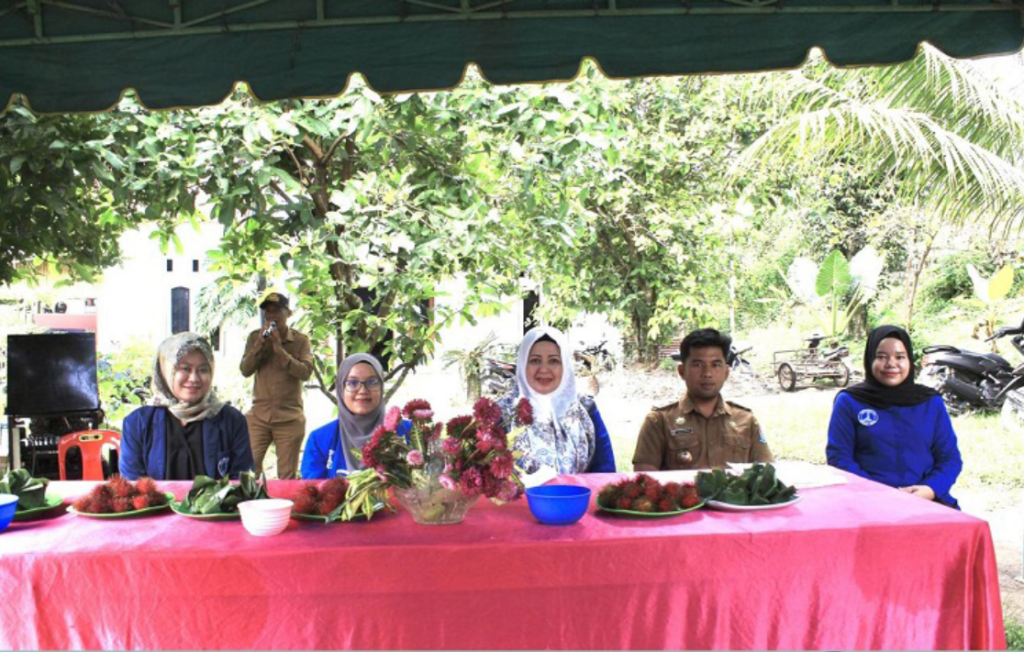
The event concluded with a photo session featuring UMA lecturers, village officials, including the village head and local leaders, and members of the Lembur Ayu Farm Group.
In summary, the Triple-Helix synergy between government, academia, and practitioners through the 2024 PKM-DRTPM Program has significantly contributed to enhancing agricultural productivity and maximizing crop yields in Sei Mencirim Village.